Law and Order

Dutch Law Prohibits Traffic Throttling, 3-Strikes Disconnecting, Deep Packet Inspection

posted onMay 9, 2012
by l33tdawg

The Netherlands has become the first country in Europe and only the second in the world to pass Net Neutrality legislation. The new law forces ISPs to treat all traffic equally and, crucially, also prevents them from peering too much into what the users are sending and receiving via their networks. 

There's been plenty of talk around the world about this type of legislation, but it's a controversial subject, not least because ISPs, copyright-dependent companies, police and government agencies and so on, don't want anything like this ever becoming law.

Apple revised nano-SIM design to address Nokia objections ahead of standards vote

posted onMay 9, 2012
by l33tdawg

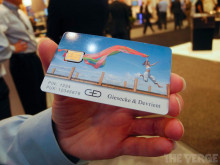
SIM card maker Giesecke & Devrient is showing off Apple's new nano-SIM design, which has been modified to resolve Nokia's objections to it, at the CTIA tradeshow in New Orleans, La. 

Handset makers have been lobbying for their preferred fourth form factor (4FF) SIM card standards as a vote by the European Telecommunications Standards Institute nears. The ETSI was scheduled to decide on the standard in March, but it postponed the vote because of continued disagreement between Apple and Nokia.

Apple files claim to obtain iphone5.com domain

posted onMay 7, 2012
by l33tdawg

Apple has filed a claim with the World Intellectual Property Organization in an attempt to gain ownership of the domain iphone5.com, which is currently owned by another party.

Apple's filing, first reported by Fusible (via MacRumors), could be seen as evidence that Apple plans to name its next-generation iPhone the "iPhone 5." However, it could also simply just be an effort by Apple to avoid confusion among consumers who might think the domain is owned by or affiliated with the company. 

Judge: An IP-Address Doesn't Identify a Person (or BitTorrent Pirate)

posted onMay 4, 2012
by l33tdawg

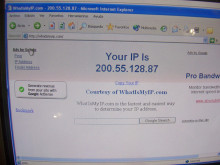
A landmark ruling in one of the many mass-BitTorrent lawsuits in the US has delivered a severe blow to a thus far lucrative business. Among other things, New York Judge Gary Brown explains in great detail why an IP-address is not sufficient evidence to identify copyright infringers. According to the Judge this lack of specific evidence means that many alleged BitTorrent pirates have been wrongfully accused by copyright holders.

Court rules UK ISPs must block The Pirate Bay

posted onMay 1, 2012
by l33tdawg

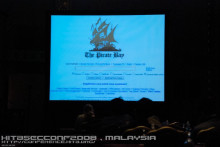
The High Court has ruled that five of the UK's largest internet service providers must block access to Swedish-based file-sharing site The Pirate Bay.

The British Phonographic Industry (BPI) claims that sites like The Pirate Bay infringe copyright on a massive scale, destroying jobs in the UK and undermining investment in new UK artists.

Bill banning employer Facebook snooping introduced

posted onApril 30, 2012
by l33tdawg

Two members of Congress have introduced a bill that would ban the practice of requiring job applicants, employees or students to provide their social networking information. 

The Social Networking Online Protection Act, authored by Congressman Eliot Engel of New York and sponsored by Congresswoman Jan Schakowsky of Illinois, is in response to a growing number of reports of employers demanding their employees’ Facebook passwords as a condition of employment.