



























Science

Dust storm affecting Mars rovers

posted onJuly 5, 2007
by hitbsecnews

A powerful dust storm on Mars has worsened and is affecting the twin rovers' operations on the Red Planet, mission scientists say. The storm, which has been brewing for a week, has partially blocked the sun. The rovers Spirit and Opportunity, which have solar panels, rely on sunlight to charge their batteries.

Scientists maintain that the robots, which are used to operating at low power levels, are not in danger.

Scientists Report DNA Transplant

posted onJune 28, 2007
by hitbsecnews

Scientists said yesterday they had transplanted a microbe's entire, tangled mass of DNA into a closely related organism, a delicate operation that cleanly transformed the recipient from one species into the other.

Experts oppose video game addiction designation

posted onJune 25, 2007
by hitbsecnews

Doctors backed away on Sunday from a controversial proposal to designate video game addiction as a mental disorder akin to alcoholism, saying psychiatrists should study the issue more.

Addiction experts also strongly opposed the idea at a debate at the American Medical Association's annual meeting. They said more study is needed before excessive use of video and online games--a problem that affects about 10 percent of players--could be considered a mental illness.

Do black holes really exist?

posted onJune 18, 2007
by hitbsecnews

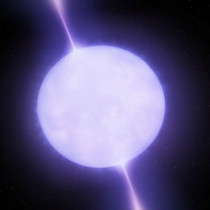
Black holes might not exist – or at least not as scientists have imagined, cloaked by an impenetrable "event horizon". A controversial new calculation could abolish the horizon, and so solve a troubling paradox in physics.

Hacking My Kid's Brain

posted onMay 29, 2007
by hitbsecnews

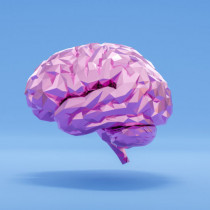
Three months ago I took my 7-year-old son through a neurological treatment designed to hack his brain. It's been 90 days since his treatment ended, and I am happy to report the hack has made a huge difference.

Friends and family inevitably ask, "Dd it work?" While a simple "yes" might suffice, the specifics of Caleb's results show just how effectively a brain can recalibrate itself. Caleb is experiencing the world in a whole new way.

Astronomers discover 28 new exoplanets

posted onMay 29, 2007
by hitbsecnews

Astronomers have discovered 28 new planets outside of our solar system, increasing to 236 the number of known exoplanets, revealing that planets can exist around a broad spectrum of stellar types — from tiny, dim stars to giants.

"We added 12 percent to the total in the last year, and we're very proud of that," said one of the study team members Jason Wright of the University of California at Berkeley. "This provides new planetary systems so that we can study their properties as an ensemble."

Magnets may make the brain grow stronger

posted onMay 24, 2007
by hitbsecnews

Could magnets make the mind grow stronger? In mice at least, stimulating the brain with a magnetic coil appears to promote the growth of new neurons in areas associated with learning and memory. If the effect is confirmed in humans, it might open up new ways of treating age-related memory decline and diseases like Alzheimer's.

A Plan to Build a Giant Liquid Telescope on the Moon

posted onMay 21, 2007
by hitbsecnews

Even by astronomical standards, Roger Angel thinks big.

Angel, a leading astronomer at the University of Arizona, is proposing an enormous liquid-mirror telescope on the moon that could be hundreds of times more sensitive than the Hubble Space Telescope.

Using a rotating dish of reflective liquid as its primary mirror, Angel's telescope would the largest ever built, and would permit astronomers to study the oldest and most distant objects in the universe, including the very first stars.

"It's an idea that's been around, and we decided to flesh it out," Angel says.

Sake may power Japanese cars of the future

posted onMay 11, 2007
by hitbsecnews

Japanese motorists may one day pump their cars full of sake, the fermented rice wine that is Japan's national drink, if a pilot project to create sake fuel is a hit with locals in this mountain resort.

The government-funded project at Shinanomachi, 124 miles northwest of Tokyo, will produce cheap rice-origin ethanol brew with the help of local farmers who will donate farm waste such as rice hulls to be turned into ethanol.

Study: iPods can make pacemakers malfunction

posted onMay 11, 2007
by hitbsecnews

iPods can cause cardiac implantable pacemakers to malfunction by interfering with the electromagnetic equipment monitoring the heart, according to a study presented by a 17-year-old high school student to a meeting of heart specialists on Thursday.

The study tested the effect of the portable music devices on 100 patients, whose mean age was 77, outfitted with pacemakers. Electrical interference was detected half of the time when the iPod was held just 2 inches from the patient's chest for 5 to 10 seconds.