













Science

NASA preps for '7 minutes of terror' on Mars

posted onMay 23, 2008
by hitbsecnews

In the wake of the wildly successful Spirit and Opportunity rover missions, you would think NASA would approach the landing of the next Martian probe with high confidence. But the truth is sometimes not what you would think.

"I do not feel confident. But in my heart I'm an optimist, and I think this is going to be a very successful mission," said principal investigator Peter Smith, an optical scientist with the University of Arizona. "The thrill of victory is so much more exciting than the agony of defeat."

Searching for Alien Neutrino Messages

posted onMay 22, 2008
by hitbsecnews

If you were a hyper advanced alien civilization, rather then mucking about with noisy electromagnetic waves, perhaps you would try to make contact with other intelligent life forms by sending your messages via neutrinos.

First detected in 1953, neutrinos pass easily through most matter making it possible for your signal to pass through the Milky Way without being blocked by stars and interstellar dust. They are also not subject to the "noise" of optical and radio waves traveling alongside them through space.

Star dies an explosive death

posted onMay 22, 2008
by hitbsecnews

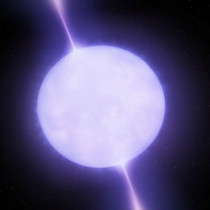
In a stroke of cosmic luck, astronomers for the first time witnessed the start of one of the universe's most fiery events: the end of a star's life as it exploded into a supernova. On January 9, astronomers used a NASA X-ray satellite to spy on a star already well into its death throes, when another star in the same galaxy started to explode. The outburst was 100 billion times brighter than Earth's sun.

EU launches second test satellite for Galileo

posted onApril 28, 2008
by hitbsecnews

The European Union launched Giove-B, the second (and last) test satellite in its $5.3 billion Galileo project, on Sunday, according to Reuters.

The first test satellite, Giove-A was launched in December 2005. Giove-B will test the program's high-precision atomic clock and signal transmission, said Reuters.

Galileo is Europe's upcoming satellite radio navigation system, and it's the EU's largest space program. Galileo will eventually become an ultra-precise system of 30 satellites, but it has hit a few bumps along the way.

How an email address can reveal your character

posted onApril 27, 2008
by hitbsecnews

THINK twice about the email address you pick: it may speak volumes about your personality.

Mitja Back and colleagues at the University of Leipzig in Germany asked a panel of 100 students to guess the personalities of 600 teenagers simply by looking at their email addresses.

Soyuz crew endures severe G-forces on re-entry

posted onApril 19, 2008
by hitbsecnews

Russian space officials say the crew of the Soyuz space ship is resting after a rough ride back to Earth.

The craft carrying South Korea's first astronaut landed in northern Kazakhstan on Saturday, 260 miles (418 kilometers) off its mark, they said.

Mission Control spokesman Valery Lyndin said the condition of the crew -- South Korean bioengineer Yi So-yeon, American astronaut Peggy Whitson and Russian flight engineer Yuri Malenchenko -- was satisfactory, though the three had been subjected to severe G-forces during the re-entry.

Strange earthquakes measured off U.S. west coast

posted onApril 14, 2008
by hitbsecnews

Scientists listening to underwater microphones have detected an unusual swarm of earthquakes off central Oregon, something that often happens before a volcanic eruption -- except there are no volcanoes in the area.

Scientists don't know exactly what the earthquakes mean, but they could be the result of molten rock rumbling away from the recognized earthquake faults off Oregon, said Robert Dziak, a geophysicist for the National Oceanic and Atmospheric Administration and Oregon State University.

Scientists Use Brain-Boosting Drugs

posted onApril 11, 2008
by hitbsecnews

One in five Nature readers -- mostly scientists -- say they up their mental performance with drugs such as Ritalin, Provigil, and Inderal.

The online poll from the British science magazine didn't ask readers how they felt about professional athletes using drugs to enhance their physical performance. But when asked how they felt about professional thinkers using drugs to enhance their cognitive performance, nearly 80% said it should be allowed.

Cities Switch Off Lights for Earth Hour

posted onMarch 30, 2008
by hitbsecnews

From the Sydney Opera House to Rome's Colosseum to the Sears Tower's famous antennas in Chicago, floodlit icons of civilization went dark Saturday for Earth Hour, a worldwide campaign to highlight the threat of climate change.

The environmental group WWF urged governments, businesses and households to turn back to candle power for at least 60 minutes starting at 8 p.m. wherever they were.

The campaign began last year in Australia, and traveled this year from the South Pacific to Europe to North America in cadence with the setting of the sun.

Ice shelf collapse: What does it mean?

posted onMarch 30, 2008
by hitbsecnews

From krill to king crabs, the collapse of a 160-square-mile portion of the Wilkins Ice Shelf in Antarctica could mean many changes for wildlife at the bottom of the world.

Most inhabitants of our planet will never get a firsthand look at a polar bear at the North Pole or a penguin at the South. But polar scientists already see changes in plants and animals from rapidly warming temperatures.

"Because of their extreme environments, they tend to be highly sensitive to temperature changes," said marine biologist James McClintock of the University of Alabama at Birmingham.