





































Science

Six biggest mysteries of our solar system

posted onJanuary 29, 2009
by hitbsecnews

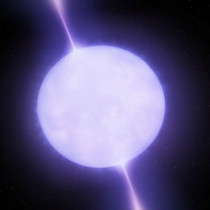
ONCE upon a time, 4.6 billion years ago, something was brewing in an unremarkable backwater of the Milky Way. The ragbag of stuff that suffuses the inconsequential, in-between bits of all galaxies - hydrogen and helium gas with just a sprinkling of solid dust - had begun to condense and form molecules. Unable to resist its own weight, part of this newly formed molecular cloud collapsed in on itself. In the ensuing heat and confusion, a star was born - our sun.

Apocalypse in 2012?

posted onJanuary 28, 2009
by hitbsecnews

Just as "Y2K" and its batch of predictions about the year 2000 have become a distant memory, here comes "Twenty-twelve."

Fueled by a crop of books, Web sites with countdown clocks, and claims about ancient timekeepers, interest is growing in what some see as the dawn of a new era, and others as an expiration date for Earth: December 21, 2012.

Medical 'microbot' to swim human arteries

posted onJanuary 20, 2009
by hitbsecnews

In 1966, the movie "Fantastic Voyage" recounted the tale of doctors who are miniaturised along with a submarine and injected into the body of a Soviet defector, sailing up his bloodstream to destroy a brain clot that imperils the VIP's life.

The improbable storyline — and the equally improbable casting of sex icon Raquel Welch as a scientist in a wetsuit — invited the audience to suspend their disbelief and enjoy a good sci-fi romp.

Possible existence of microbes on Mars

posted onJanuary 17, 2009
by hitbsecnews

Plumes of methane in the atmosphere of Mars provide evidence of the possible existence of microbes living below the Martian surface that produce the gas as some do on Earth, US scientists said on Thursday.

The methane likely was produced either by water reacting with hot rock below the surface or by living microorganisms as a waste product, they said during a NASA news briefing. The scientists said the evidence does not suggest the methane was brought to Mars by an object like a comet.

Our world may be a giant hologram

posted onJanuary 16, 2009
by hitbsecnews

DRIVING through the countryside south of Hanover, it would be easy to miss the GEO600 experiment. From the outside, it doesn't look much: in the corner of a field stands an assortment of boxy temporary buildings, from which two long trenches emerge, at a right angle to each other, covered with corrugated iron. Underneath the metal sheets, however, lies a detector that stretches for 600 metres.

Women's Brains Recognize, Encode Smell Of Male Sexual Sweat

posted onJanuary 12, 2009
by hitbsecnews

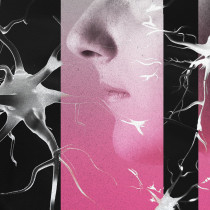
A new Rice University study published in the Journal of Neuroscience found that socioemotional meanings, including sexual ones, are conveyed in human sweat. Denise Chen, assistant professor of psychology at Rice, looked at how the brains of female volunteers processed and encoded the smell of sexual sweat from men. The results of the experiment indicated the brain recognizes chemosensory communication, including human sexual sweat.

Longstanding Theory Of Origin Of Species In Oceans Challenged

posted onJanuary 2, 2009
by hitbsecnews

Most scientists believe that allopatric speciation, where different species arise from an ancestral species only after breeding populations have become physically isolated from each other, is the dominant mode of speciation both on land and in the sea. The key to this theory is the existence of some kind of physical barrier that operates to restrict interbreeding (gene flow) between populations so that, given enough time, such populations diverge until they’re considered separate species.

Are amateur genetic engineers dangerous?

posted onDecember 29, 2008
by hitbsecnews

Amateur geneticists, working at home in spare bedrooms and garages, are manipulating the basic building blocks of life. Are they scientific researchers or are they dangerous meddlers?

Memories may be stored on your DNA

posted onNovember 29, 2008
by hitbsecnews

REMEMBER your first kiss? Experiments in mice suggest that patterns of chemical "caps" on our DNA may be responsible for preserving such memories. To remember a particular event, a specific sequence of neurons must fire at just the right time. For this to happen, neurons must be connected in a certain way by chemical junctions called synapses. But how they last over decades, given that proteins in the brain, including those that form synapses, are destroyed and replaced constantly, is a mystery.

New Longevity Drugs Poised to Tackle Diseases of Aging

posted onNovember 24, 2008
by hitbsecnews

Cancer, diabetes, Alzheimer's, Parkinson's, heart disease: All have stubbornly resisted billions of dollars of research conducted by the world's finest minds. But they all may finally be defied by a single new class of drugs, a virtual cure for the diseases of aging.